Coconut Shell Briquettes vs Hardwood Charcoal
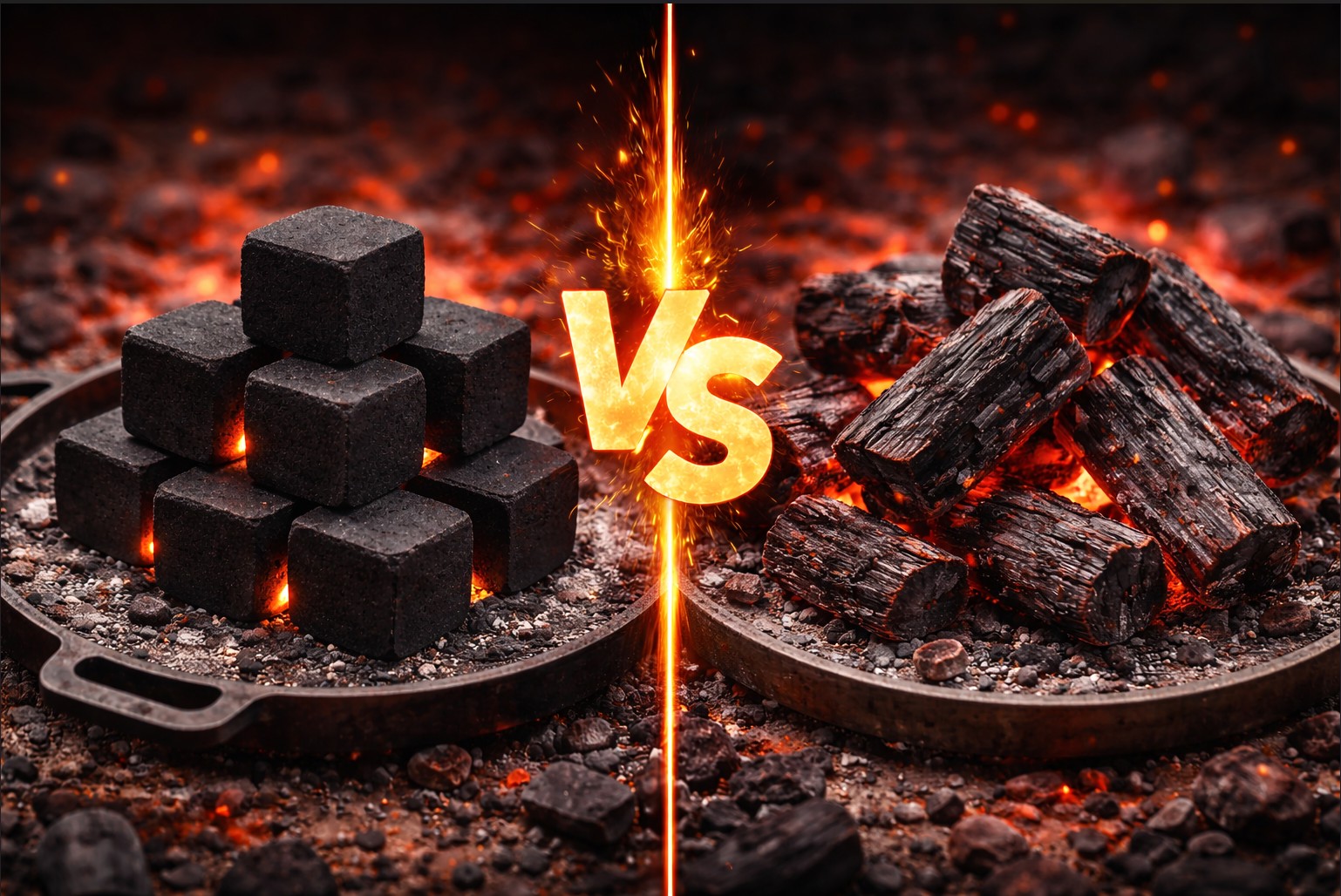
Coconut Shell Briquettes vs Hardwood Charcoal: The Ultimate Guide
Did you know using organic waste can cut carbon emissions by over 70 percent? Most outdoor cooks don't know how much their heat choice affects their food's taste. We're here to guide you through these bbq fuel alternatives for a tasty, eco-friendly meal.

Choosing a sustainable grilling fuel is wise for chefs in the United Arab Emirates. We dive deep into how these fuels perform under high heat and for long times. Our team aims to help you save money, protect the environment, and keep cooking standards high.
Please call us at +6281220806059 to learn more about the best fuel for your cooking needs. We offer expert advice for both home hobbyists and busy commercial restaurant owners. Let us help you find the perfect fuel for your grill today.
Key Takeaways
- Understand the burn time differences between fuel types.
- Learn how recycled materials reduce environmental impact.
- Compare heat consistency and smoke levels for better flavor.
- Discover cost-effective options available in the UAE.
- Identify which product is best for long, slow cooking sessions.
- Make an informed decision for your residential or commercial grill.
Understanding the Two Most Popular Grilling Fuel Options
Grilling is all about choosing the right fuel. You have coconut shell briquettes and hardwood charcoal to pick from. Each has its own special features. Knowing what they are and how they're made is key to making a good choice.
What Are Coconut Shell Briquettes and How They're Made
Coconut shell briquettes come from coconut shells. They're made by heating the shells in a special way. This turns them into a carbon-rich fuel that's good for the planet.
Need help picking the right fuel? Call us at +6281220806059. Our experts can help you find the perfect fuel for your grill.
What Is Hardwood Charcoal and Its Production Process
Hardwood charcoal is made from hardwood. It's also made by heating it in a special way. This creates a fuel that burns hot and adds a smoky flavor to food.
Why Choosing the Right Fuel Matters for Your Grilling Experience
The fuel you choose affects your grilling. It changes the taste, heat, and quality of your food. Think about burn time, heat, and how it's for the environment when deciding.
| Fuel Type | Raw Material | Production Process | Eco-Friendliness |
|---|---|---|---|
| Coconut Shell Briquettes | Coconut Shells | Carbonization | High |
| Hardwood Charcoal | Hardwood | Carbonization | Medium |
Learning about these fuels helps you choose better. For advice tailored to you, get in touch with us.
Coconut Shell Briquettes vs Hardwood Charcoal: Direct Comparison of Key Features
Coconut shell briquettes and hardwood charcoal are different in the grilling world. Knowing these differences helps you choose the right fuel for your needs.
Raw Material Sources and Manufacturing Methods
Coconut shell briquettes and hardwood charcoal come from different materials and making processes. Coconut shell briquettes use coconut shells from coconut processing. The making process includes several steps.
Coconut Shell Processing Techniques
First, coconut shells are carbonized at high temperatures without oxygen, called pyrolysis. Then, the charcoal is crushed and mixed with starch. This mixture is pressed into briquettes. For more details, call us at +6281220806059.
Hardwood Carbonization Process
Hardwood charcoal is made by heating wood in a low-oxygen setting. This breaks down the wood into charcoal. The quality depends on the wood type and carbonization temperature.
Physical Properties and Density Differences
Coconut shell briquettes and hardwood charcoal have different physical properties. Briquettes are denser and more uniform in size and shape than charcoal.
| Characteristics | Coconut Shell Briquettes | Hardwood Charcoal |
|---|---|---|
| Density | High | Variable |
| Size Uniformity | Uniform | Variable |
| Burn Time | Longer | Variable |
Initial Ignition and Lighting Characteristics
Coconut shell briquettes and hardwood charcoal light differently. Briquettes light easily and burn consistently. Charcoal is harder to light but offers a traditional grilling feel.
When picking between coconut shell briquettes and hardwood charcoal, think about the environmentally friendly and organic charcoal choices. Coconut shell briquettes are more eco-friendly due to their source and production.
Heat Performance and Burn Duration Analysis
Grilling enthusiasts know the importance of heat performance and burn duration. These aspects greatly affect your grilling quality and efficiency. It's key to understand the differences between coconut shell briquettes and hardwood charcoal.
Maximum Temperature Output Comparison
Coconut shell briquettes and hardwood charcoal have different heat outputs. Hardwood charcoal can reach higher temperatures. This is because it burns more straightforwardly.
Coconut shell briquettes, on the other hand, offer controlled heat. They might not hit the peak temperatures of hardwood charcoal. But, they provide a consistent heat that's often preferred for certain grilling tasks.
Heat Consistency Throughout the Grilling Session
Consistent heat is essential for perfectly cooked food. Coconut shell briquettes are known for their consistent heat output. They're great for longer grilling sessions where steady temperature is crucial.
Hardwood charcoal can produce high heat but may have fluctuating temperatures. Experienced grillers can manage this by adjusting the charcoal distribution.
Total Burn Time and Fuel Efficiency
Coconut shell briquettes generally burn longer. Their dense composition makes them more fuel-efficient for extended grilling.
Hardwood charcoal burns hotter but has a shorter burn time. You might need more charcoal to keep the grill temperature up for longer.
Ash Production and Cleanup Requirements
Ash production is another important factor. Coconut shell briquettes produce minimal ash, making cleanup easier and less often. Hardwood charcoal, however, can produce more ash, requiring more frequent cleaning.
For a detailed comparison, let's examine the key differences in a tabular format:
| Characteristics | Coconut Shell Briquettes | Hardwood Charcoal |
|---|---|---|
| Maximum Temperature Output | Lower peak temperature | Higher peak temperature |
| Heat Consistency | Consistent heat output | Can have fluctuating temperatures |
| Total Burn Time | Longer burn times | Shorter burn times |
| Ash Production | Minimal ash production | More ash production |
For specific performance needs, such as high heat or long burn times, consult experts. You can learn more about the differences between coconut briquettes and lump or call us at +6281220806059 to discuss your grilling performance needs.

Environmental Impact: Comparing Sustainable Grilling Fuel Options
The environmental impact of grilling fuels is key for those who care about the planet.
Carbon Emissions and Air Quality Considerations
Looking at coconut shell briquettes and hardwood charcoal, we see different impacts. Their production methods vary, leading to different environmental effects.
Clean Burning Charcoal Comparison Results
Research shows coconut shell briquettes burn cleaner than hardwood charcoal. They have a denser structure and less moisture, leading to fewer emissions.
Smoke Production Levels
Hardwood charcoal makes more smoke than coconut shell briquettes. This smoke can harm air quality and human health.
| Fuel Type | Carbon Emissions | Smoke Production |
|---|---|---|
| Coconut Shell Briquettes | Lower | Minimal |
| Hardwood Charcoal | Higher | Significant |
Renewable Resource Utilization and Sustainability
Coconut shell briquettes use waste coconut shells. This makes them more sustainable than hardwood charcoal. It also reduces waste from coconut production.
Waste Byproduct Management
Both types of charcoal produce ash. But, coconut shell briquettes make less ash. This makes them easier to use for grilling.
The Best Eco-Friendly Charcoal Option for UAE Consumers
In the UAE, coconut shell briquettes are a better choice for the environment. They have a lower impact and are made sustainably. They are a great option for eco-friendly grilling.
For advice on eco-friendly charcoal in the UAE, call us at +6281220806059.
Cost Effectiveness and Market Value in the UAE
In the UAE, choosing between coconut shell briquettes and hardwood charcoal is key for grill lovers. We look at how these options compare in cost and market value. Several factors influence this comparison.
Purchase Price Per Kilogram Comparison
Coconut shell briquettes are often cheaper than hardwood charcoal per kilogram. This is due to their use of waste coconut shells. They are more sustainable and cost-effective.
A kilogram of coconut shell briquettes costs AED 10 to AED 15. Hardwood charcoal costs AED 15 to AED 25 per kilogram. This difference can save money, especially for those who grill often.
Cost Per Grilling Session Analysis
Looking at the cost per grilling session is important. It considers burn time and heat output. Coconut shell briquettes burn longer and hotter, saving money per session.
| Fuel Type | Cost Per Kilogram | Burn Time Per Kilogram | Cost Per Grilling Session |
|---|---|---|---|
| Coconut Shell Briquettes | AED 12 | 4 hours | AED 3 |
| Hardwood Charcoal | AED 20 | 3 hours | AED 6.67 |
Long-Term Investment and Value Assessment
Assessing long-term value is crucial. Coconut shell briquettes offer consistent quality and less ash. This means better grilling and less cleanup.
For those looking for cost-effective grilling solutions, coconut shell briquettes are a good choice. They provide a great grilling experience at a lower cost. For more info, call +6281220806059.
Availability and Sourcing in United Arab Emirates
The availability of grilling fuels in the UAE varies. Coconut shell briquettes are now widely available in supermarkets and online. Hardwood charcoal is found in specialty stores.
For a detailed comparison of coconut shell charcoal and hardwood charcoal, visit our guide on coconut shell charcoal vs hardwood charcoal.

Practical Applications and Best Grilling Options for Different Needs
Different grilling scenarios need different types of charcoal. Knowing these differences is key to great results. Whether grilling at home or running a commercial operation, choosing between coconut shell briquettes and hardwood charcoal matters a lot.
Ideal Uses for Coconut Shell Briquettes
Coconut shell briquettes are great for many grilling needs. They burn consistently and produce little ash. This makes them perfect for both home and commercial grilling.
Restaurant and Commercial Grilling
Restaurants and commercial grilling benefit from coconut shell briquettes. They offer consistent heat, which is important for quality in big cooking jobs. Plus, they burn clean, reducing ash and smoke. For more on choosing the best charcoal briquettes, check out our guide on choosing the best charcoal briquettes.
Home BBQ and Outdoor Cooking
Home BBQ lovers will find coconut shell briquettes great. They light fast, burn steady, and leave less ash than regular charcoal. This makes them perfect for frequent grilling and outdoor cooking.
Optimal Applications for Hardwood Charcoal
Hardwood charcoal is loved for its smoky flavor and high heat. It's great for grilling and smoking where these qualities are important.
Traditional Grilling and Smoking
Hardwood charcoal is best for traditional grilling and smoking. It adds a deep, smoky flavor to food. It's perfect for slow-cooking meats and getting that real barbecue taste.
High-Heat Searing Requirements
For those who need high heat for searing steaks or getting a perfect crust, hardwood charcoal is the best. It can get hotter than coconut shell briquettes, making it ideal for high-heat cooking.
Flavor Impact on Food: Natural Charcoal Comparison
Both coconut shell briquettes and hardwood charcoal have their flavor strengths. Coconut shell briquettes offer a cleaner, neutral taste. Hardwood charcoal gives a rich, smoky flavor. The choice depends on personal taste and the dish being cooked.
| Charcoal Type | Ideal Use | Flavor Profile | Heat Output |
|---|---|---|---|
| Coconut Shell Briquettes | Commercial Grilling, Home BBQ | Neutral | Consistent |
| Hardwood Charcoal | Traditional Grilling, Smoking, High-Heat Searing | Smoky | High |
For personalized grilling advice or to see our organic charcoal choices, call us at +6281220806059. We're ready to help you enhance your grilling experience.
Conclusion
Choosing between coconut shell briquettes and hardwood charcoal depends on your grilling needs, environmental concerns, and budget. Both options have their pros and cons. Coconut shell briquettes are a green choice that's both renewable and efficient.
For those who care about the environment, coconut shell briquettes are a great pick. Hardwood charcoal, on the other hand, offers a traditional grilling taste. By considering these points, you can choose what's best for you.
If you have more questions or need help picking the right grilling fuel, we're here for you. Call us at +6281220806059 for personalized advice. We can help you find more eco-friendly charcoal options.