Indonesia Exports Charcoal Briquettes to USA
Indonesia Exports Charcoal Briquettes to USA
Can one clear, documented buying process cut import risk and save time for American buyers? We ask this up front because many decision-makers want a simple route from inquiry to delivery.
We outline what a typical indonesia export charcoal briquettes to usa program looks like, from supplier vetting and written specs to sampling, production, payment, shipping, and customs paperwork.

Our guide is for hookah lounge operators, BBQ brands, restaurant groups, and import distributors who need consistent product and clear timelines. We explain how coconut-based and sawdust product lines differ by use, and what buyers must evaluate beyond price: performance, consistency, compliance, and supplier reliability.
We reduce risk by setting expectations, documenting each step, and supporting export planning. To start, contact us on WhatsApp at +6281220806059 for pricing, samples, or sample shipment planning.
Key Takeaways
- We walk the buyer through the full export process and required documents.
- Product choice (coconut vs. sawdust) matters for performance and specs.
- Supplier vetting and written specs cut delivery and compliance risk.
- Timelines and paperwork matter as much as product quality.
- Decision-makers can request quotes and samples via WhatsApp +6281220806059.
Why US Buyers Source Charcoal Briquettes From Indonesia
Many U.S. operators now prefer fuel made from coconut shell because it blends sustainability with consistent performance.

Reliable raw material: Abundant coconut shells mean predictable supply lines and scalable production. That stability helps procurement teams plan repeat orders and avoid last-minute shortages.
Practical sustainability: Using coconut as a feedstock turns agricultural waste into useful fuel. This circular approach reduces pressure on wood forests and supports responsible sourcing in the industry.
Performance that matters: Coconut charcoal often delivers higher heat and longer burn time. For shisha and cooking, operators see cleaner flavor, less smoke, and fewer interruptions during service.
| Feature | Coconut shell charcoal | Typical wood charcoal |
|---|---|---|
| Heat output | High (up to ~500–650°C) | Moderate |
| Burn time | Long and steady | Shorter, more variable |
| Smoke & smell | Minimal | Noticeable |
| Business impact | Lower consumption, better value | Higher re-stocking and training needs |
Choosing higher-performing fuel links directly to fewer complaints, less downtime, and more predictable monthly costs. For multi-location operators and distributors, that translates into real business value.
Product Options We Export to the United States
We offer a focused range of products built around performance and shelf readiness. Our line meets needs across hospitality, retail, and industrial segments.

Coconut shell shisha charcoal briquettes for hookah lounges
Shisha charcoal cubes are commonly made at 25×25×25 mm with ash around 1.8–2%.
Cube density controls heat stability and session length. Higher density gives steady heat and easier handling during service.
Hexagonal BBQ briquettes for restaurants and grilling brands
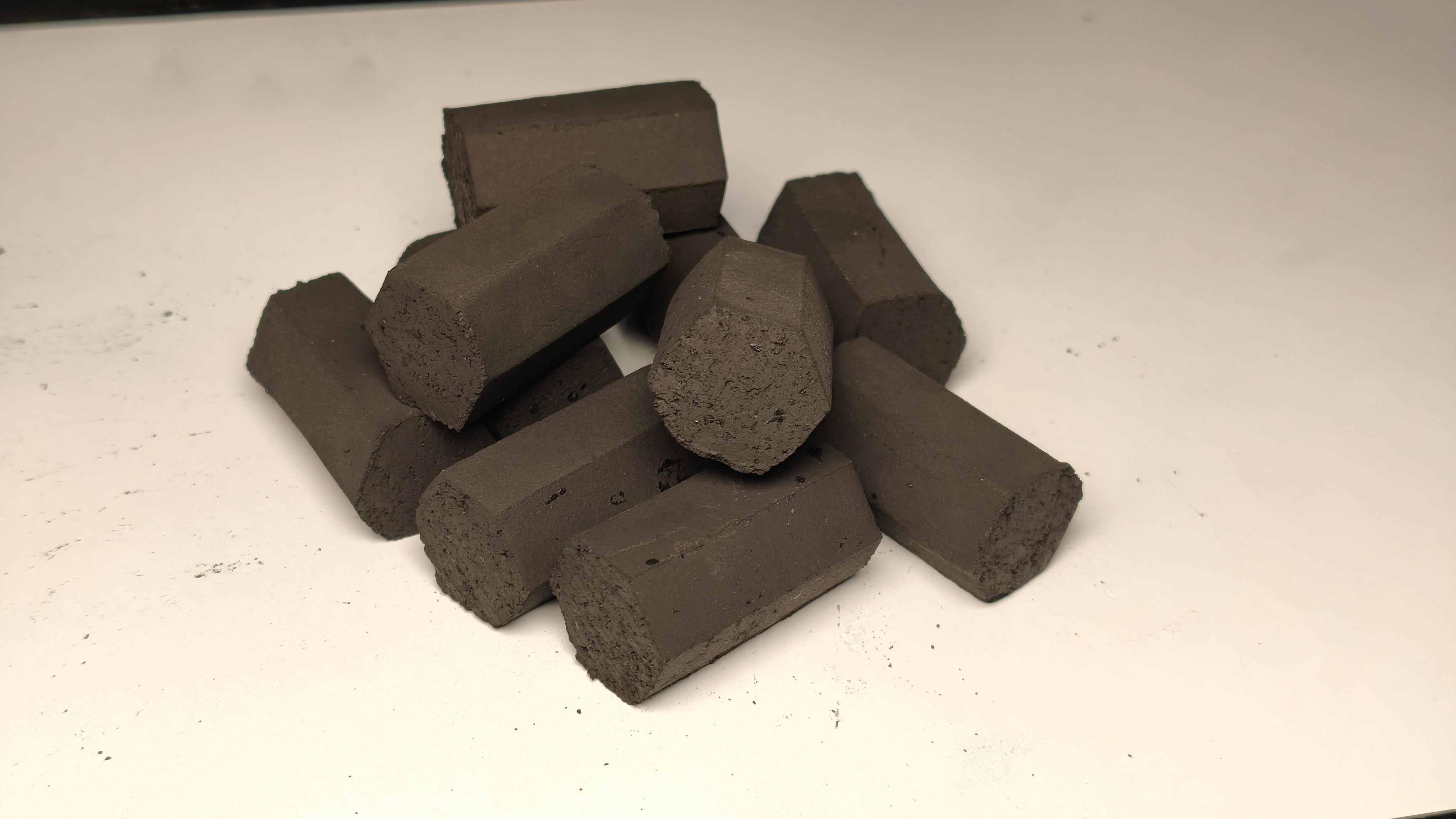
Hex blocks (typical 21×38 mm) provide improved airflow and steady heat for grilling lines.
Some listings show calorific values near 7300 kcal/kg and burning time around 2 hours per charge—useful for kitchen planning.
Sawdust briquettes for heating, boilers, and industrial use
Sawdust options suit continuous-feed systems and bulk heating. They deliver predictable calorific output and compact storage.
Shapes, sizes, and OEM/custom branding for your market
We support cubes, hex, and tailored formats. OEM paths include private label box artwork, carton markings, and compliance-ready labels.
Packaging formats such as 1 kg inner boxes, 10 kg master cartons, and bulk packs
Common packaging: 1 kg retail inner boxes, 10 kg master cartons for distribution, and bulk packs for foodservice or industrial buyers.
Proper packaging reduces breakage and protects product integrity during inland and ocean transit.
Specifications US Importers Should Require for Quality and Compliance
Clear technical specs cut disputes and make every shipment perform as promised. Below we list the practical measurements buyers should insist on with each order.
Ash and ash content targets
Require ash and ash content values on the COA. For shisha use, specify less than 2%. For BBQ and retail lines, demand a low-ash option to reduce residue and cleanup.
Moisture benchmarks
Set moisture targets such as <5%. Low moisture helps stable ignition, cleaner burning, and longer shelf life in humid storage.
Fixed carbon and calorific value
Ask for fixed carbon above 80–85% and a calorific value near 7,000–7,500 kcal/kg. Request a lab COA that matches the sales claim.
Burning time, lighting time, and clean burn
Specify expected burning time in minutes or hours so staff can plan refuels. For shisha, set lighting time around 6–7 minutes on a coal burner.
Define clean burn: no smell, no sparking, and minimal smoke for better customer experience.
Durability and handling checks
Require drop test resistance and carton integrity standards to limit breakage and dust during transit. Include pass/fail criteria on pre-shipment inspection reports.
- Buyer-ready checklist: Include ash, moisture, fixed carbon, calorific value, burning time, lighting time, clean burn, and drop test on purchase orders.
indonesia export charcoal briquettes to usa: How We Help You Buy With Confidence
We verify production capacity, export experience, and past shipment proof before any order moves forward. Our goal is to make sourcing predictable and low risk for U.S. buyers.
How we vet capacity and past shipments
We check company registration, export licensing, and proof of past shipments. These documents show a supplier can meet volume and timing.
We assess factory capacity, line consistency, and packaging readiness so you don’t face surprises at arrival.
How samples are handled for testing
Small samples (often 1 kg) ship by courier with 3–5 day transit. This lets you test burn behavior, smoke, and handling before committing.
We coordinate sample tracking and compare results to the agreed product specs.
Third-party inspection and lab testing
For larger orders we arrange third-party surveys such as SGS or Carsurin. Lab COAs, pre-shipment photos, and video checks back your approval process.
- Independent inspection at loading
- Lab reporting for fixed carbon, moisture, and ash
- Pre-shipment photo/video approval to match packing and quantity
Ready to start? Contact us on WhatsApp +6281220806059 for quotes, sampling, and inspection coordination.
Ordering, Payment Terms, and Commercial Considerations
We make the ordering process simple so procurement teams can align approvals and timelines. Clear payment terms, firm minimums, and pre-production sign-offs cut delays and disputes.
Common payment structures
Typical flow: a down payment starts production and the balance pays against documents like the Bill of Lading. This is the usual approach in our industry for standard orders.
When a Letter of Credit makes sense
Use an L/C for larger orders or first-time relationships. It protects both buyer and seller and suits business teams that need bank-backed security.
"An L/C balances risk when volume or value is high, or when internal controls require bank verification."
Key order details to confirm in writing
- MOQ: confirm minimum order quantities and any tier pricing.
- Lead time: plan ~2–3 weeks for container production, longer if packaging or private label is complex.
- Final specs: lock ash, moisture, and fixed-carbon ranges on the PO.
- Packaging & labeling: approve artwork and shipping marks before production.
- Quality control: require COA per lot and pre-shipment photo approval.
We advise clear communication with your supplier at each step. Pre-production approvals and timely payments keep schedules on track and protect product quality for charcoal briquettes shipments.
Shipping to the USA: Incoterms, Transit Times, and Export Documents
Shipping choices shape your landed cost, transit schedule, and who handles insurance for each container. We explain how FOB differs from CNF/CIF and why that matters when you calculate final cost into the United States.
FOB vs CNF/CIF and landed cost
FOB means the buyer books sea freight and insurance from the loading port; this gives control over carriers and cost. CNF/CIF bundles freight (and sometimes insurance) with the seller’s offer, which simplifies booking but can raise the landed cost.
Typical transit times
Plan ~22–30 days for the U.S. West Coast and ~30–40 days for the East Coast by sea. Allow extra days for port congestion, inland trucking, and customs processing.
Ports and container planning
Common loading ports include Tanjung Priok, Tanjung Perak, and some exporters use Semarang depending on factory location. Confirm palletization, carton strength, and packing orientation to reduce dust and breakage.
Documentation checklist and avoiding delays
Ensure the Commercial Invoice, Packing List, Bill of Lading, Certificate of Origin, and COA travel with the shipment. Some orders also need a Phytosanitary Certificate.
Final tip: match names, weights, and HS codes across all papers and request pre-shipment photos/videos. Accurate paperwork and clear labeling cut demurrage and speed customs clearance for charcoal briquettes shipments.
Conclusion
Successful sourcing finishes with confirmed specs, tested samples, and clean paperwork.
We summarize the key decision points: choose a fit-for-use product, insist on measurable specs, vet the supplier, and prepare shipment-ready documents.
Consistent quality comes from lab numbers for ash, moisture, and fixed carbon — not marketing claims. Ask for lighting and burn time data so staff planning matches actual performance.
Match shisha, BBQ, or industrial options to the right heat profile. That protects customer experience and long-term value.
For fast help, share your target specs, packaging needs, and destination port. Contact us on WhatsApp +6281220806059 to request pricing, samples, and a shipment plan for charcoal briquettes.